Publishing on Kindle: The Complete Guide to Your First Ebook (2026)
Step-by-step guide to publishing on Kindle. Cover KDP setup, formatting, pricing, Kindle Unlimited, marketing, and common mistakes to avoid.


Amazon's Kindle store is the biggest ebook marketplace in the world. About 80% of all US ebook sales happen there, and it reaches readers in over 100 countries. If you want people to actually find and buy your ebook, Kindle is the most straightforward way to make that happen.
Here's how the whole process works — from creating your KDP account to clicking "Publish" and what comes after.
Why Kindle Is the Dominant Ebook Platform
Three things make Kindle the obvious choice for most authors.
For most authors — especially first-timers — Kindle gives you the best shot at actual sales.
Kindle Publishing Requirements
Setting Up Your KDP Account
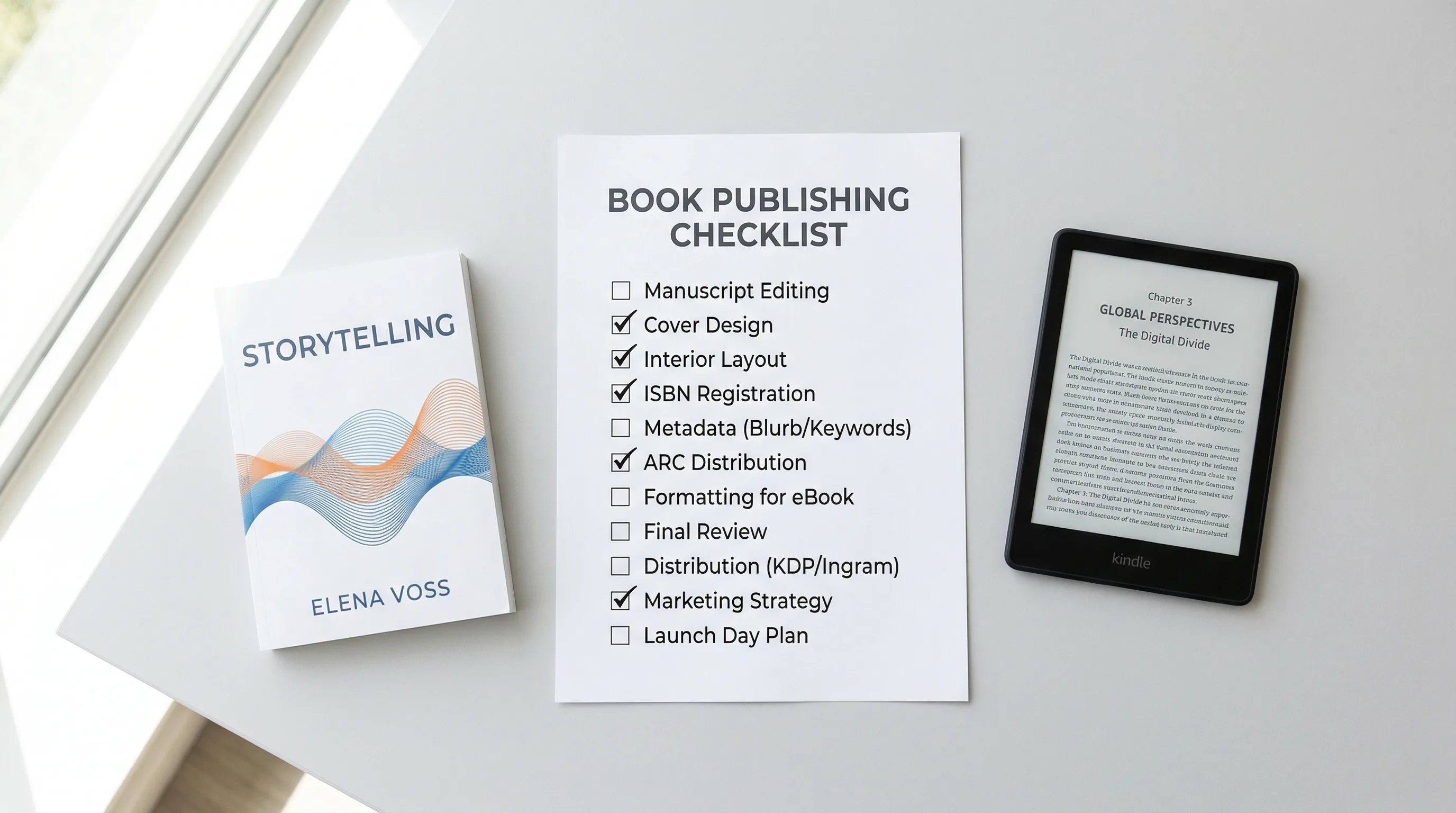
You'll need to provide:
- Legal name or business name (this goes on tax documents, not necessarily your book)
- Address
- Tax information — W-9 if you're in the US, W-8BEN if you're not. Amazon needs this for royalty reporting
- Bank account for royalty payments — needs to be in a supported country. Amazon pays via electronic fund transfer in most regions
The good news: approval is instant. You can start uploading right after you finish the tax interview.
Accepted Manuscript Formats
KDP accepts these file formats:
| Format | Notes |
|---|---|
| EPUB | Preferred format. Best conversion quality and formatting fidelity |
| KPF (Kindle Package Format) | Output from Kindle Create. Native Kindle format |
| DOCX | Acceptable but conversion quality varies. Simple formatting only |
| DOC | Legacy Word format. Not recommended |
| HTML / HTM | For those comfortable with code |
| MOBI | Being phased out. EPUB is the replacement |
| Only for print. Not recommended for reflowable Kindle ebooks |
Cover Requirements
Your cover needs to meet these specs:
- Recommended dimensions: 2,560 x 1,600 pixels
- Aspect ratio: 1.6:1 (height to width)
- Minimum: 1,000 pixels on the longest side
- File format: JPEG or TIFF
- Color space: RGB
- Max file size: 50 MB
Content Guidelines
Amazon has content rules. Break them and your book gets rejected — or worse, your account gets shut down.
The main no-gos: illegal material, content promoting violence against specific groups, public domain stuff with nothing original added, content generated entirely by AI without human oversight, and anything misleading (fake reviews inside the book, deceptive titles).
You'll need to disclose AI-assisted content during upload and make sure you have rights to everything you publish. Books also need to meet basic quality standards — no excessive typos, readable formatting, and content that actually matches what the title promises.
Most books sail through review. Just don't do anything obviously sketchy and deliver real value.
Kindle Ebook Formatting Essentials
Formatting for Kindle works differently than formatting for print. Here's what you need to know.
Reflowable vs. Fixed Layout
If your book is mostly text, go reflowable. Simple as that.
Active Table of Contents
Amazon requires a working, clickable table of contents in every Kindle ebook. No exceptions. Skip this and your book gets flagged.
Your TOC needs to:
- Be built from actual heading styles (H1, H2, etc.) in your manuscript
- Link directly to the right chapter or section when tapped
- Show up in the Kindle's built-in "Go To" navigation menu (this is the HTML TOC, also called the NCX or logical TOC)
- Optionally appear as a page inside the book itself (an inline TOC at the front)
Metadata: Title, Subtitle, and Series
Your title and subtitle directly affect how people find your book on Amazon. A subtitle like "A Practical Guide to Personal Finance for Beginners" adds search terms that your main title alone might miss.
Front Matter and Back Matter for Kindle
Kindle readers skip front matter fast. Keep it short: title page, copyright page, optional inline TOC, maybe a dedication. Push acknowledgments and forewords to the back.
Publishing on Kindle: Step by Step
Here's the exact process from finished manuscript to live Kindle ebook.
Step 1: Format Your Manuscript for Kindle
Get your manuscript into a Kindle-compatible format. EPUB is the way to go. Make sure:
- All chapters use consistent heading styles
- Images are embedded and sized right (max 5 MB per image, 50 MB total)
- No manual page breaks or forced formatting that'll break on different screens
- Hyperlinks work
- The table of contents generates properly
Step 2: Create a Kindle-Optimized Cover
Design your cover at 2,560 x 1,600 pixels in RGB. Save as JPEG.
What matters most for Kindle covers: readable at thumbnail size (if you can't read the title at 80 x 120 pixels, start over), high contrast (bold colors and clear text pop on both light and dark backgrounds), genre-appropriate (look at the top 20 books in your category and match the visual style), and simple composition (one dominant image, clear title, author name).
Step 3: Write Your Book Description
This shows up on your Amazon product page. It's your sales copy. Amazon gives you up to 4,000 characters with basic HTML:
<b>Bold</b>and<i>Italic</i><br>for line breaks<h2>for subheadings (don't overdo it)
Think of it like a landing page:
- Opening hook — One or two sentences that grab attention and speak to the reader's problem
- Body — What the book covers, what the reader gets out of it, why this book. Use bullet points so people can scan
- Social proof — Brief credentials or endorsements if you have them
- Closing CTA — "Scroll up and click Buy Now" or "Download your copy today"
Don't cram in keywords awkwardly. Write for the person deciding whether to buy.
Step 4: Choose 7 Keywords Strategically
KDP gives you 7 keyword slots, each up to 50 characters. These help Amazon's algorithm find your book in search.
Some tips: don't repeat words already in your title or subtitle (Amazon indexes those anyway), use phrases instead of single words ("personal finance for millennials" beats "finance"), think about what a buyer would actually type, mix broad and specific phrases, and see what top competitors are targeting. Publisher Rocket and Amazon's auto-suggest are good for finding strong keywords.
Step 5: Select Categories
You can pick up to three browse categories during upload. These determine which bestseller lists you can rank on and how Amazon recommends your book.
Go specific. "Business & Money > Personal Finance > Budgeting & Money Management" beats just "Business & Money." Check how competitive each category is — ranking #1 in a niche category with 500 books is way more realistic than fighting for position in a 500,000-book category. After you publish, you can contact KDP support to add up to 10 categories total.
Step 6: Set Your Price
Amazon has two royalty tiers:
| Price Range | Royalty Rate | Delivery Cost | Notes |
|---|---|---|---|
| $2.99 – $9.99 | 70% | Deducted per MB delivered | Best range for most books |
| $0.99 – $2.98 or $10.00+ | 35% | No delivery cost | Lower rate, but no delivery fee |
Step 7: Preview with Kindle Previewer
Look for: working TOC links, properly displayed chapter headings, correctly sized images, and no weird formatting (random page breaks, garbled characters). Test on Kindle E-reader, Kindle Fire, iOS, and Android. Something that looks fine on one device can break on another.
Step 8: Hit Publish
When everything looks good in preview:
- Double-check all your metadata (title, subtitle, description, keywords, categories)
- Confirm pricing and royalty selection
- Confirm publishing territories (most authors go with "All territories")
- Click Publish Your Kindle eBook
Your book goes into Amazon's review queue. It's not live yet.
KDP Select and Kindle Unlimited
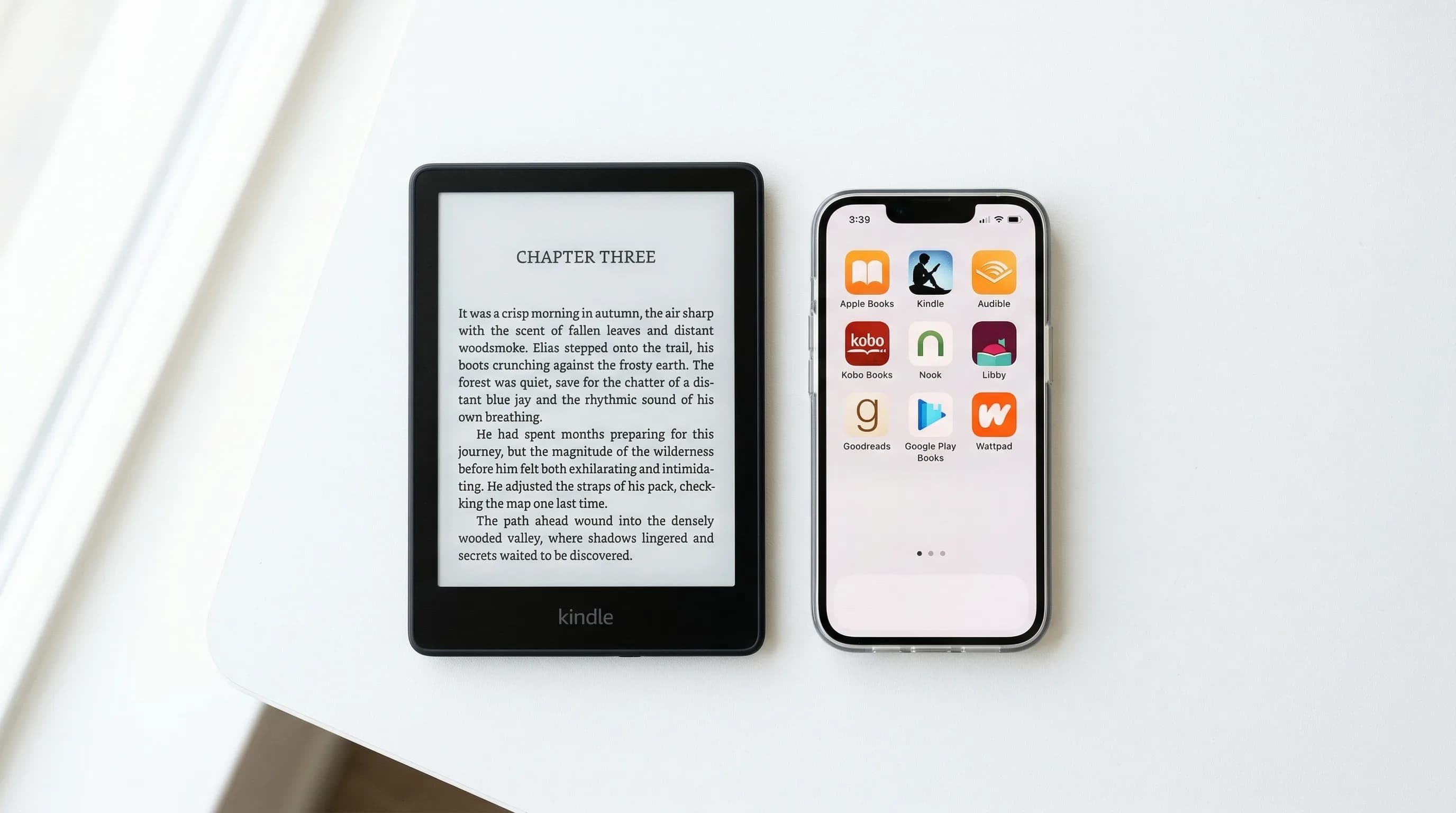
What KDP Select Is
The 90-Day Exclusivity Commitment
Here's the catch: KDP Select means your ebook is exclusive to Amazon for 90 days. No selling on Apple Books, Kobo, Barnes & Noble, Google Play, your own website, or anywhere else. It auto-renews unless you opt out before the 90-day window ends.
How KENP Payments Work
When KDP Select Makes Sense
Promotional Tools in KDP Select
Enrollment gives you two promo options:
Kindle Publishing Timeline
The Review Process
After you hit "Publish," your book enters Amazon's review queue. Here's what to expect:
- Typical review time: 24–72 hours
- Most books: Done within 24 hours
- Flagged for manual review: Can take up to 72 hours
- Rejection reasons: Content policy violations, cover quality issues, or metadata problems (title doesn't match cover, misleading description)
If your book gets rejected, KDP emails you the reason. Fix it, resubmit. Most rejections are easy to sort out.
When to Expect First Sales
Let's be honest here. Days 1–3: your book shows up in Amazon's catalog but might not appear in all search results right away. Days 3–7: Amazon indexes your book and search visibility picks up. Weeks 1–2: if you did pre-launch work (email list, review copies), sales start coming in. Weeks 2–4: organic discovery kicks in as Amazon's recommendation engine uses purchase and reading data to show your book to more people.
Without any marketing, a new book from an unknown author might see zero sales for weeks. Marketing isn't optional.
The 30-Day New Release Window
Amazon gives new releases a small algorithmic boost during the first 30 days. Use this window to:
- Get initial reviews
- Build sales velocity
- Show Amazon's algorithm that your book deserves more visibility
Put your biggest marketing push into these 30 days. Every sale and page read during this window has an outsized effect on your long-term ranking.
Kindle Marketing Basics
Publishing your book is the starting line. Here's how to actually get it selling.
Launch Strategy
Amazon Ads (Sponsored Products)
Start small: $5–$10/day with a handful of tightly targeted keywords. The basic loop: target relevant keywords, let your cover and title do the selling, send traffic to a strong book page (good description, reviews, competitive price), and scale what works based on your ACOS numbers.
Category Ranking Strategy
Ranking in a Kindle category puts your book on Amazon's bestseller lists, which drives organic discovery. Pick niche categories where fewer sales get you ranked, concentrate your launch sales into a 24–48 hour window to spike your ranking, and keep steady daily sales (even 3–5 per day) to hold your spot.
Ask KDP support for additional categories after launch to expand your reach. A #1 bestseller tag — even in a small category — adds credibility and can drive extra sales for months.
Common Kindle Publishing Mistakes
These are all avoidable. Don't make them.
- Uploading a messy manuscript. Broken TOCs, missing chapter breaks, images that won't resize — all of it kills the reading experience. Preview before you publish.
- Using a bad cover. A homemade-looking cover that doesn't fit your genre tanks your click-through rate. It doesn't matter how good the book is if nobody clicks.
- Writing a boring description. Your description is sales copy. A flat summary doesn't sell — write about what the reader gets out of it.
- Ignoring keywords and categories. These are free ways to get found. Empty keyword slots are wasted opportunities.
- Pricing too high as a debut author. No reviews and $9.99? That's a tough sell. Start lower, build up proof, then raise the price.
- Launching with no marketing plan. Amazon rewards books that sell. No marketing means no sales means no ranking.
- Skipping the preview step. Five minutes in Kindle Previewer saves you from formatting problems that take weeks to fix once the book is live.
- Not building an email list. If Amazon is your only connection to readers, you don't really have a connection. An email list lets you launch future books to people who already care.
Kindle Publishing vs. Wide Distribution
"Should I go Kindle-only or publish everywhere?" There's no one-size-fits-all answer. Here's how it breaks down.
Kindle-Only (KDP Select)
Wide Distribution (Multi-Platform)
The Practical Decision
From Manuscript to Published Kindle Ebook
The process is pretty simple once you know the pieces. Format your manuscript as a clean EPUB, design a professional cover at 2,560 x 1,600 pixels, write good metadata, pick your pricing and KDP Select strategy, preview everything, and hit publish. Then put your energy into marketing during that 30-day new release window.
The publishing part isn't the hard part. The hard part is writing a good book and getting people to notice it. Amazon gives you the platform. You bring the content and the hustle.
Your ebook is one upload away from reaching millions of readers. Go publish it.
Jaro Suranyi
“Kindle publishing opened the door for millions of authors. The barrier to entry is gone — now the only thing that matters is the quality of what you put out.”
Recommended Reading
How to Publish on Amazon KDP: The Complete Guide to Self-Publishing Your Book (2026)
Learn how to publish on Amazon KDP step by step. Cover account setup, formatting, pricing, royalties, keywords, and more to launch your book.

KDP Cover Template: The Complete Guide to Getting Your Book Cover Right
Learn how to download and use the KDP cover template for paperback and ebook covers. Step-by-step guide to specs, dimensions, and common mistakes.
KDP Formatting: The Complete Guide to Publishing on Amazon in 2026
Learn KDP formatting for ebooks, paperbacks & hardcovers. Step-by-step specs for margins, trim sizes, file types & common errors to avoid.